Pro-Active Greens: Ingredients, Preparation, and Everyday Details
Explore Pro-Active Greens from MarketPlace Global, including ingredient groups, Passion Punch packaging, mixing directions, and dietary considerations.

Papa Ron Deering
Independent Sales Rep • MarketPlace Global
By Ron Deering
The word “greens” can cover a lot of different products. Some are powders, some have flavoring, and some combine a long list of ingredients. If you are curious about Pro-Active Greens from MarketPlace Global, it helps to look at the specific formula rather than make assumptions from the category name.
This guide introduces the product’s format, the ingredient groups MPG lists, and the practical details behind mixing and comparing packages. It is a straightforward way to get acquainted with the product before deciding whether you want more information.
Disclosure: I am a MarketPlace Global Independent Sales Rep and may earn a commission on qualifying purchases credited to me.
What Is Pro-Active Greens?
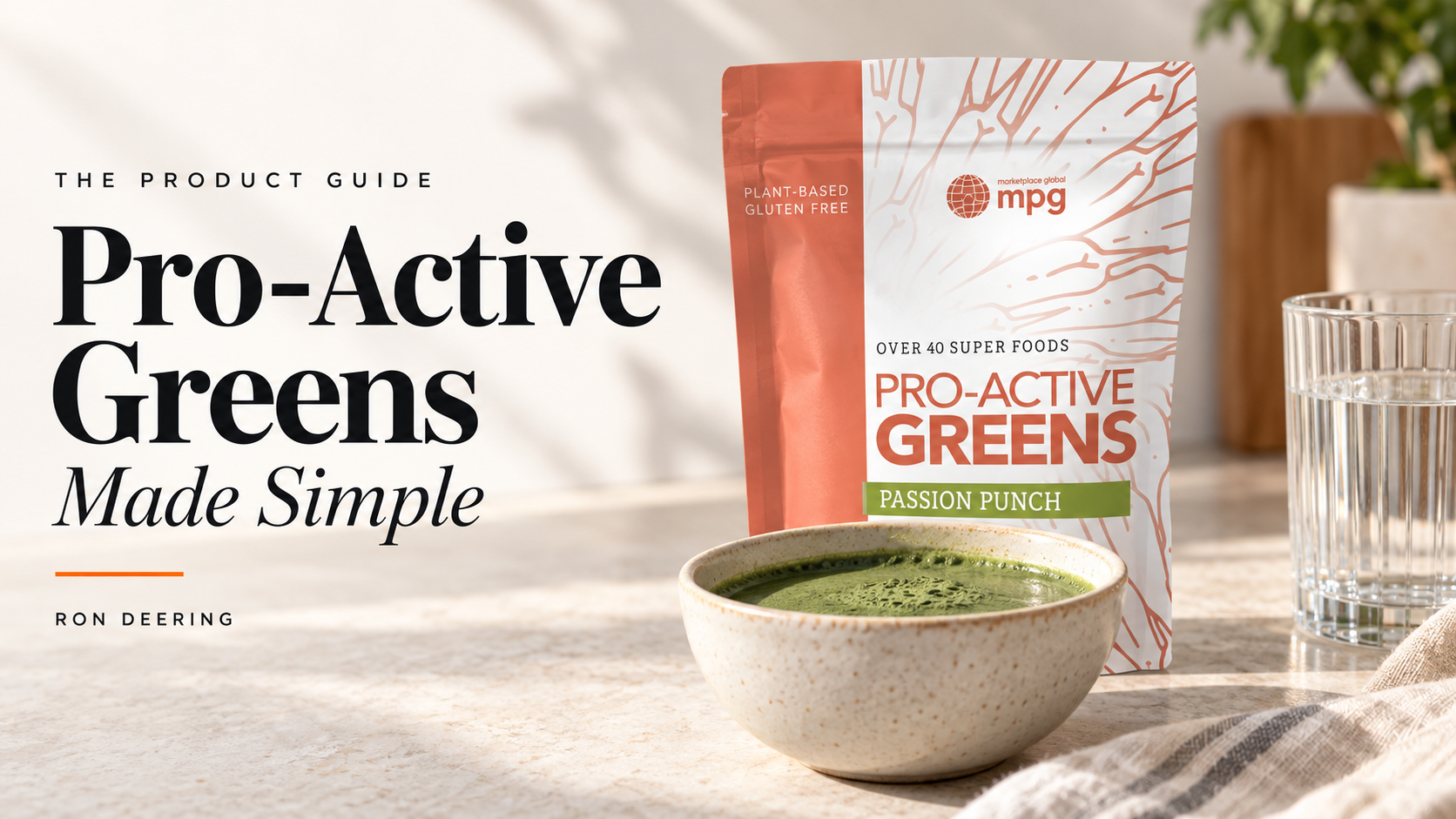
MPG describes Pro-Active Greens as a powdered blend with more than 40 ingredients. Its materials show a Passion Punch presentation, including a bag and individual sticks. The company lists ingredients from several groups, including greens, fruits, herbs, fibers, and microorganisms. Sources: MPG’s Pro-Active Greens information sheet and MPG’s customer sample page.
That gives you a starting description, but it is not the same thing as reading the complete formula. A broad category such as greens does not tell you every ingredient, flavoring, or preparation instruction in a particular product.
I would begin with the exact name and flavor on the item you are considering. If a store lists multiple greens products or package sizes, keep those options separate while you compare them.
Looking Through the Ingredient Groups
The published ingredient list includes barley grass, wheat grass, kale, spinach, broccoli, and chlorella, along with fruit ingredients such as blueberry and raspberry. It also lists herbs and other components, including ginger, turmeric, fibers, bacterial cultures, enzymes, and flavoring ingredients. Source: MPG’s Pro-Active Greens customer page.
The variety makes the full label more useful than a short list of highlights. Read through the complete panel, including ingredients that receive less attention on the front of the package. The list above is only an introduction, not a replacement for that review.
Ingredient variety also should not be confused with a promise about what the product will do. This article does not assign health effects to the formula or suggest that a long ingredient list automatically makes a product right for everyone.
A Detail That Matters for Dietary Preferences
The reviewed ingredient list includes royal jelly. For that reason, this guide does not describe Pro-Active Greens as vegan. The list also contains yerba mate, so this guide does not assume the product is caffeine-free. Source: MPG’s Pro-Active Greens customer page.
These are examples of why the full ingredient panel deserves attention. A leafy image or a familiar category name cannot answer every question about dietary preferences, allergies, or sensitivities.
If you need confirmation about a particular ingredient or caffeine amount, use the exact product and package information when asking. Avoid borrowing the caffeine number printed for another MPG product; each formula needs its own answer.
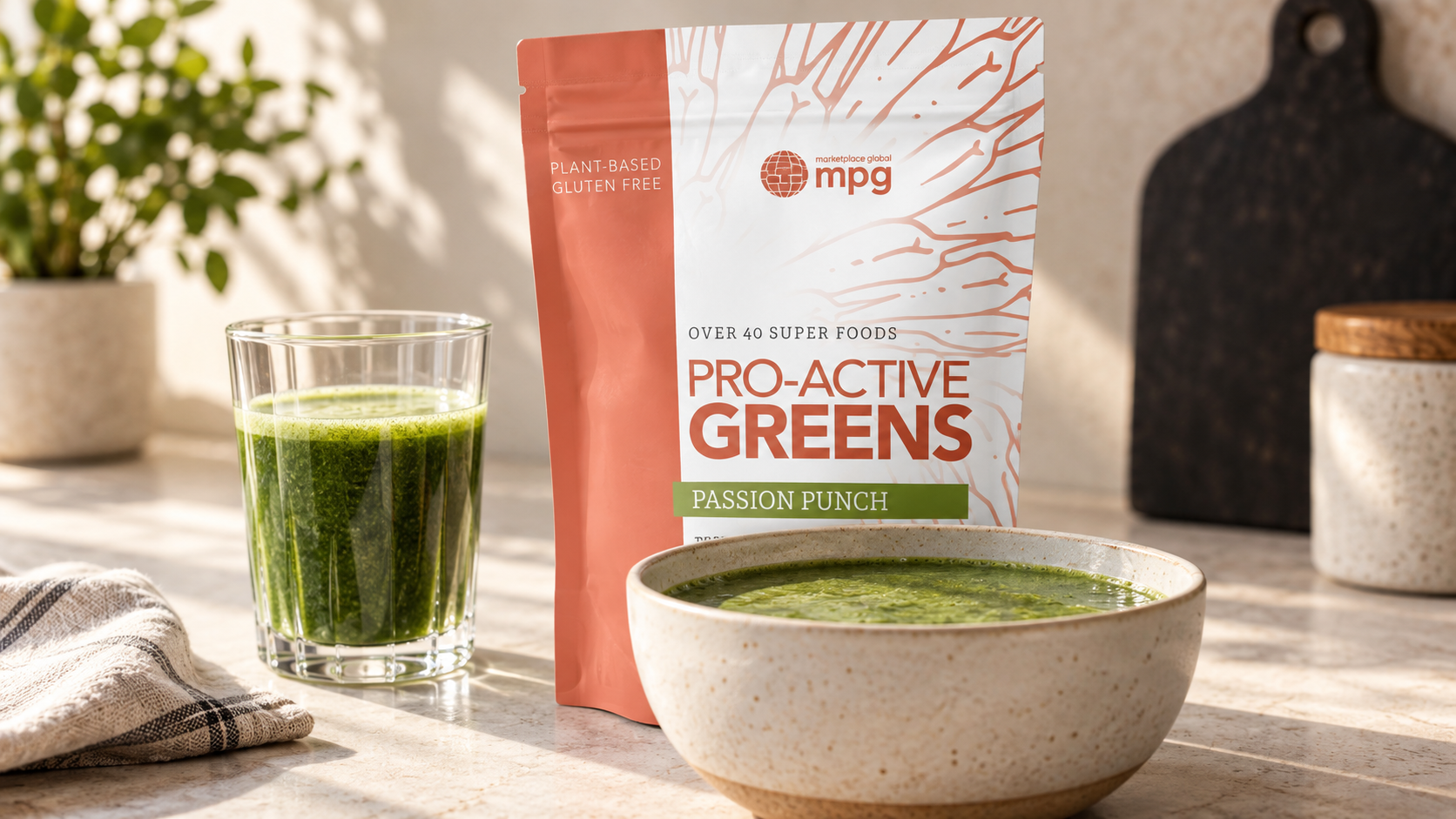
Illustrative Pro-Active Greens product scene; the appearance of a prepared serving may vary.
Preparing the Stick Presentation
MPG’s customer page describes mixing one Pro-Active Greens stick with 8–12 ounces of cold water, or adding it to a smoothie. Follow the directions on the package you receive, especially when using a multi-serving bag instead of a stick. Source: MPG’s Pro-Active Greens customer page.
For a simple setup, choose a glass or mixing container with room for the recommended liquid. Keep the directions nearby until the process is familiar. If your package uses a scoop, measure it as directed rather than estimating by appearance.
A smoothie contains its own ingredients, so keep those separate in your thinking. Fruit, milk, yogurt, or other additions contribute their own nutrition and allergen considerations. Adding the product to a recipe does not make those details disappear.
Taste and Routine Are Personal
A flavor name can help you identify a package, but it cannot predict whether you will enjoy it. Taste and texture preferences vary, and the liquid or recipe you choose can change the finished experience.
If a smaller package is currently available, read its description carefully to see what it includes. A sample can be an opportunity to become familiar with the product’s preparation and flavor, without implying that it will demonstrate a health result within a certain number of days.
Think about where you would actually keep and prepare it. A kitchen cupboard, a workspace, and a travel bag each have different practical considerations. Follow the storage directions rather than assuming every location is suitable for the powder.
Keeping the Product in Perspective
A powdered blend is one product with its own ingredient panel. It should not be treated as a complete description of your meals or as a substitute for the variety of foods in a balanced diet. The FDA makes that broader distinction in its consumer information about supplements. Source: FDA’s dietary supplement overview.
For a purchasing decision, focus on what you can establish: the exact formula, the package size, the preparation method, and your unanswered questions. You do not need a promise about energy, digestion, immunity, or any other outcome to have a useful product conversation.
That is the approach I prefer when sharing information. Clear details allow you to decide what you would like to explore further without adopting someone else’s expectations.
Comparing Packages and Order Terms
Read the serving count on the specific bag or sample pack. Similar product photographs do not necessarily indicate the same quantity. If two options have different serving counts, compare the price per labeled serving as well as the full checkout total.
Confirm shipping, taxes, the current return terms, and whether the purchase is recurring. If an offer includes other products, identify what belongs to the greens package and what belongs to the bundle.
Keep a copy of the order description. It gives you something concrete to refer to if the package arrives with a question about its contents or format.
Common Questions About Pro-Active Greens
Does “greens” mean every ingredient is a leafy vegetable?
No. The reviewed formula includes several ingredient groups. Read the entire label rather than using the product category as an ingredient list.
Is the bag measured the same way as an individual stick?
Use the directions for the format you receive. A portioned stick and a measured scoop should not be treated as interchangeable without checking the instructions.
Can this guide tell me whether it suits my dietary restrictions?
It identifies details worth checking, but the current full label and manufacturer’s clarification are the right references for product-specific questions. Health and allergy questions should be discussed with a qualified healthcare professional.
Explore Pro-Active Greens
The best place to begin is with the actual product: its ingredients, its format, and how it is prepared. Once those details are clear, deciding what to ask next becomes easier.
Visit Discover Our Place to learn more about Pro-Active Greens and the MPG product collection.
This article is general product information, not medical advice, and makes no health or results claims. Review the current ingredients, directions, and warnings. Consult a qualified healthcare professional about allergies, medications, medical conditions, pregnancy, nursing, or use by a child. Product formulas, flavors, package sizes, and availability may change.