
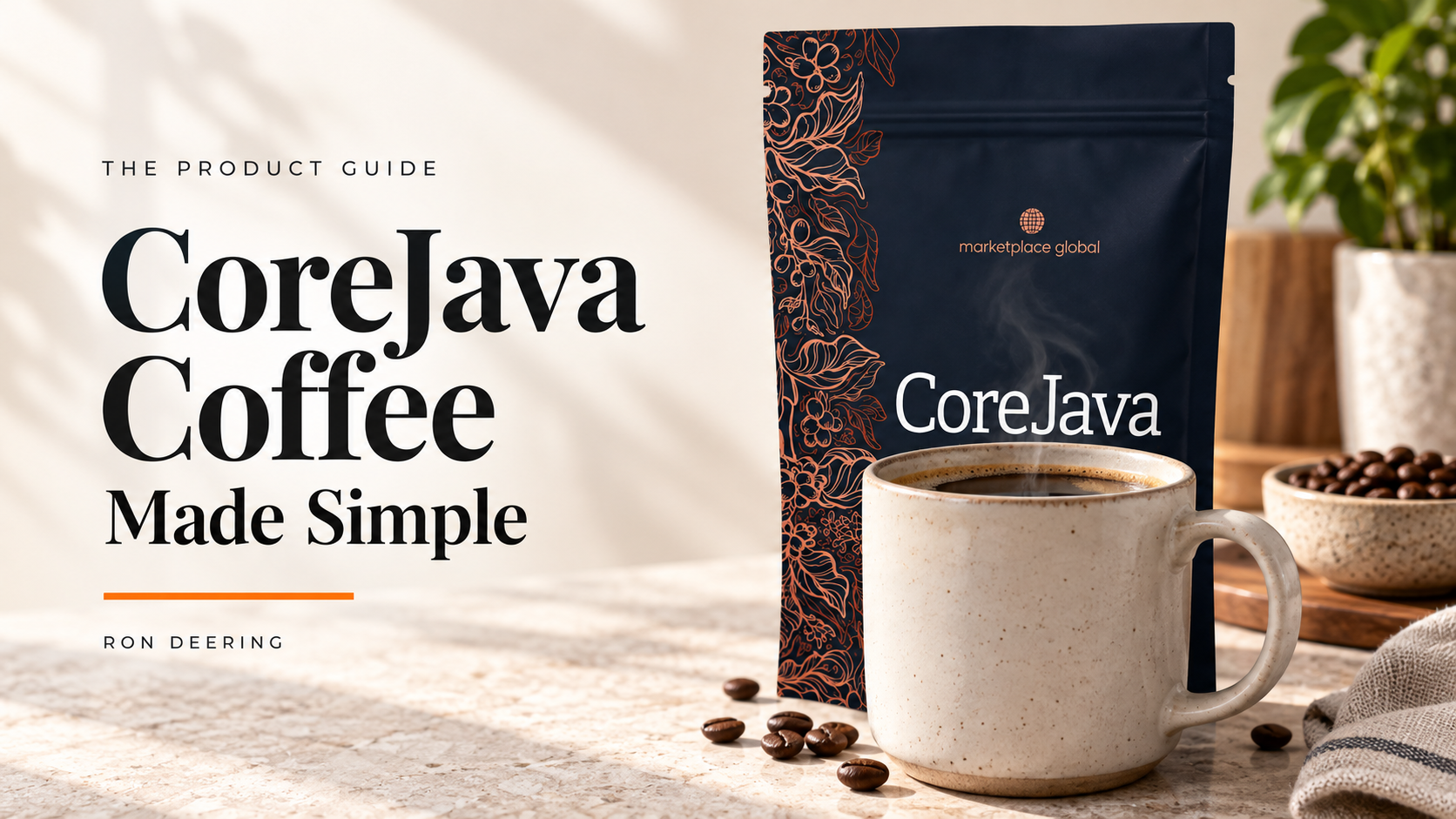
CoreJava Coffee: A Closer Look at the Cup and the Label
Explore CoreJava Coffee from MarketPlace Global with a practical guide to its ingredients, instant coffee format, caffeine information, and preparation.

Papa Ron Deering
Independent Sales Rep • MarketPlace Global
By Ron Deering
Coffee often has a place in the day before we give it much thought: a favorite mug, a familiar spot in the kitchen, and a few minutes before the next thing begins. When a different coffee catches your attention, the natural questions are simple. What kind of coffee is it? How do you prepare it? What else is in it?
CoreJava Coffee from MarketPlace Global deserves that same practical introduction. This guide looks at its format, its labeled ingredients, and the details to consider when comparing it with the coffee already in your cupboard.
Disclosure: I am a MarketPlace Global Independent Sales Rep and may earn a commission on qualifying purchases credited to me.
What Is CoreJava Coffee?
MPG’s CoreJava information sheet describes an instant dark-roast Colombian coffee formula with additional ingredients. The pictured package identifies the product as a dietary supplement. Its preparation method involves mixing the measured product with hot water. Source: MPG’s CoreJava information sheet.
That means it is worth reviewing the full label, even if making a cup feels familiar. The coffee name gives you the beverage category; the ingredient panel gives you the fuller product description.
I find that distinction helpful when introducing any product. A familiar format can make something easy to recognize, but it does not replace understanding what is in the package.
What the Ingredient Panel Tells You
The official sheet lists dark-roast Colombian instant coffee alongside chromium, a Garcinia cambogia extract, L-theanine, natural caffeine, a grains-of-paradise extract, and a saffron extract. It also lists other ingredients, including MCT powder and flavoring components. Source: MPG’s CoreJava information sheet.
This is an ingredient overview, not a complete transcription of the label or a description of health effects. The current package remains the reference for exact amounts, ingredient names, and any dietary considerations relevant to you.
When you compare coffee products, it is useful to separate the coffee itself from the additional ingredients. You may be looking for a particular preparation method, a certain ingredient profile, or simply a different option for your shelf. Knowing your own priorities makes the comparison more useful.
Caffeine Is Part of the Conversation
MPG’s product FAQ identifies CoreJava as a product containing naturally occurring caffeine. It advises customers with caffeine sensitivities to review ingredient information. Source: MPG’s product FAQ.
Check the total caffeine amount on the current package or obtain confirmation from the manufacturer for your exact version. A line for added caffeine and the total caffeine in a finished coffee product are not necessarily interchangeable numbers.
This article does not suggest increasing your caffeine intake or combining CoreJava with other caffeinated products. If caffeine is something you monitor, having the correct product-specific information is more useful than comparing it with an undefined “average cup.”
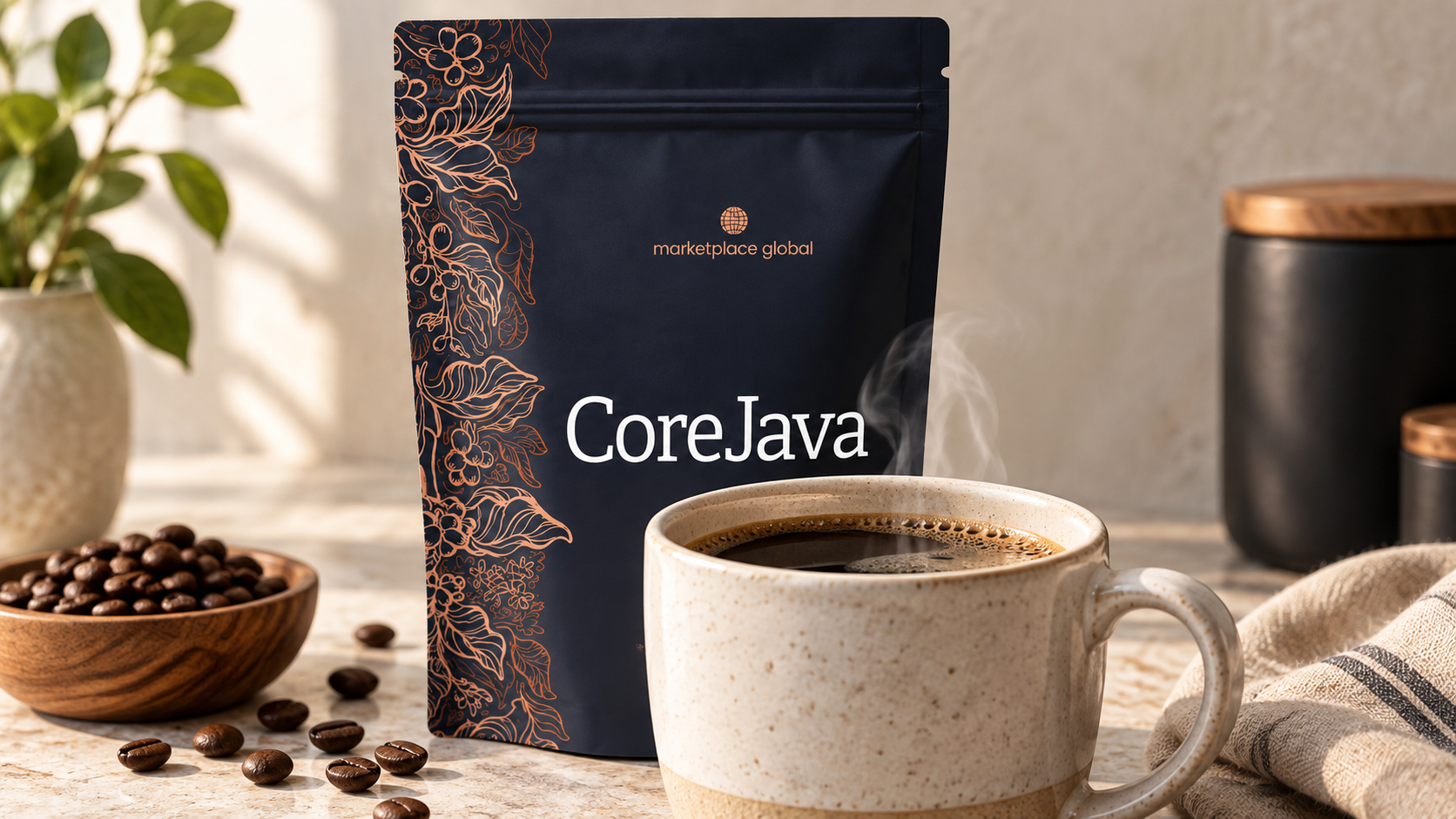
Illustrative CoreJava product scene; the cup is not a measured serving or a statement of results.
Preparing Your Cup
The official information describes stirring a measured scoop into hot water. Because serving details and package presentations can vary, use the scoop amount and water volume printed on the bag you receive. Source: MPG’s CoreJava information sheet.
Set out a clean mug and spoon before beginning. Read the instructions once all the way through, rather than assuming the scoop works like the scoop from another product. A kitchen tablespoon, a measuring scoop, and a heaped spoonful are different things.
If you normally add milk, a creamer, or a sweetener, treat those as separate ingredients in your cup. Their nutrition and allergen information come from their own labels. What someone adds in a lifestyle photograph should never be mistaken for the manufacturer’s preparation instructions.
The Practical Side of a Coffee Routine
Think about where you would prepare it. At home, you might keep the bag near your mug and store the scoop as directed. At work, you may need access to hot water and a suitable cup. These details help you picture the routine before you buy.
Storage deserves a moment of attention too. Keep the product in its original package and follow the printed storage directions. If the closure, scoop, or packaging arrives damaged, get clarification before using it.
Taste is personal, so I would not promise that any coffee will become everyone’s favorite. Preparation, your usual coffee preferences, and anything you add to the cup all shape the experience. A straightforward introduction leaves space for those differences.
Comparing Package Value
Compare servings as well as price. Start with the current bag’s labeled serving count, then consider shipping, taxes, and any order conditions. Do not assume that two bags of similar size contain the same number of servings.
If a sample or smaller option is available when you order, check exactly what it includes. Availability and promotions can change, so an older post should not be treated as a current offer.
Also review whether the order is a one-time purchase or recurring delivery. That is particularly useful with a product you might naturally think about reordering as part of a daily routine.
Questions People Ask About CoreJava
Is it ordinary ground coffee for a coffee maker?
The official sheet reviewed for this guide describes an instant coffee formula prepared with water. Follow the package method rather than assuming it should go into a drip machine or espresso machine.
Can I judge the entire formula from the front of the bag?
The Supplement Facts and other-ingredients panels provide information the front cannot fit. Read them together before deciding whether the formula matches your preferences.
Does this guide promise a particular result?
No. It introduces the coffee, ingredients, and preparation considerations. It does not promise changes in weight, appetite, concentration, energy, or any other health outcome.
Take a Closer Look at CoreJava
A good coffee introduction can be as simple as understanding the formula, reading the label, and picturing how you would prepare the cup. That is where I would begin.
Visit Discover Our Place to explore CoreJava Coffee and learn more about MPG.
This article is general product information, not medical advice. Follow the current label and warnings. Consult a qualified healthcare professional about suitability if you take medication, have a medical condition, or have questions about caffeine or an ingredient. Do not use this article to determine suitability for a child or during pregnancy or nursing. Product details and availability may change.